What Is Acoustical Plaster?
How It Works, Where It's Used, and How It's Installed
scroll
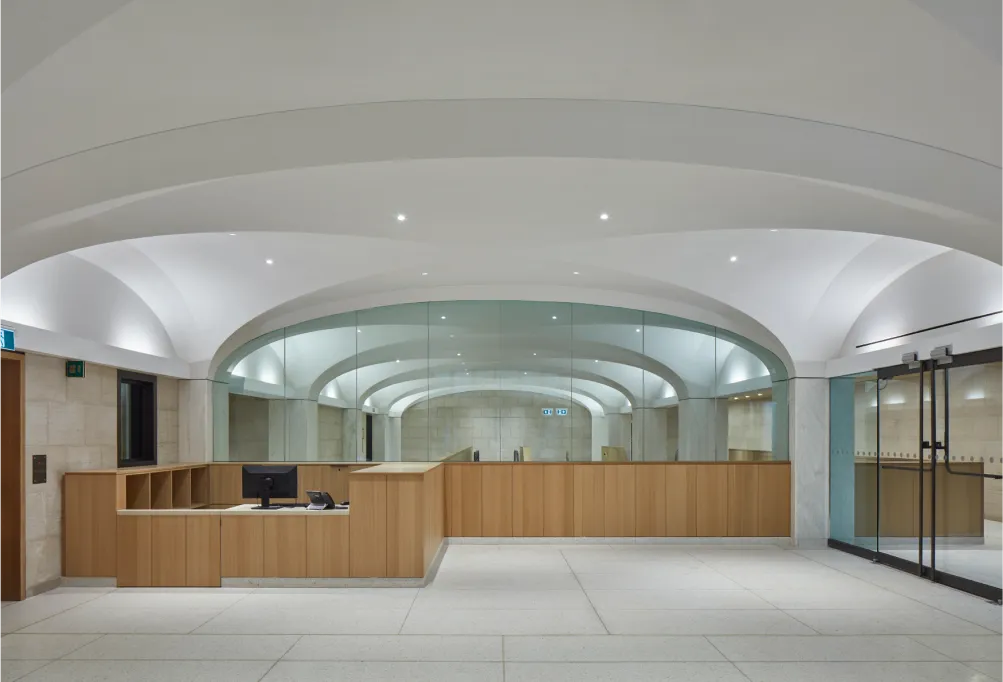
Acoustical Plaster in the Visitor's Welcome Center at Parliament Hill in Ottawa, Ontario
Acoustical plaster is a wall and ceiling finish system that combines sound-absorbing performance with the appearance of a conventional plastered surface. Unlike acoustic ceiling tiles or suspended baffles, it presents no visible grid, perforation, or panel edge. The result is a monolithic surface that is acoustically active but visually indistinguishable from ordinary plaster.
The material is used across a wide range of building types, from concert halls and courthouses to private residences, restaurants, libraries, and transit hubs. Anywhere that hard, reflective surfaces accumulate unwanted reverberation, acoustical plaster can be a technically and aesthetically viable solution.
%201.webp)
Sound energy behaves predictably: it travels through air until it encounters a surface, at which point it is reflected, absorbed, or transmitted. Hard, nonporous wall and ceiling surfaces reflect most of the energy back into a room, which is what creates echo and buildup of reverberation. Acoustical plaster works by intercepting that energy before it can reflect.
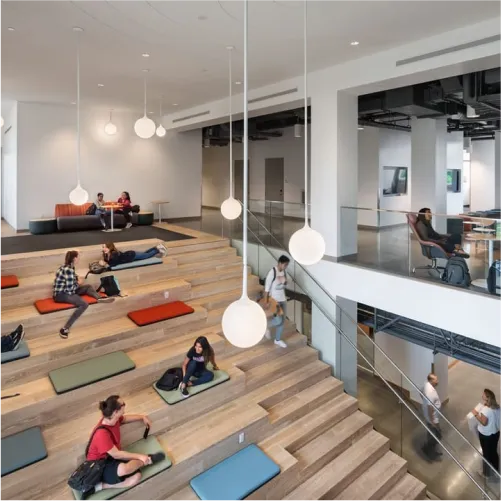
Modern acoustical plaster systems are built in layers. A mineral wool substrate, typically a factory-prepared panel, provides the primary sound-absorbing body of the system. Sound waves penetrate the microporous finish layer and enter the fibrous matrix of the mineral wool, where their energy dissipates as a negligible amount of heat. Lower-frequency energy can also cause the system to vibrate slightly, converting that energy through diaphragmatic action as well.
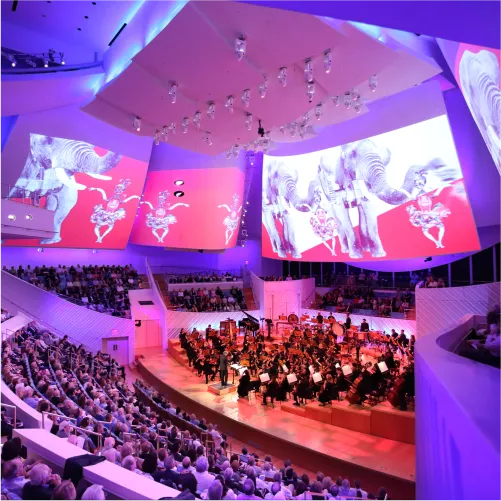
The outermost finish layer, typically a troweled or spray-applied coating of natural marble aggregate, is formulated to remain acoustically transparent, meaning it does not seal or block the path of sound into the absorptive layers beneath. This is what distinguishes acoustical plaster from conventional plaster, which would block that path entirely.

The acoustic performance of a system is expressed as a Noise Reduction Coefficient (NRC), a single-number rating that averages a material's sound absorption coefficients at 250, 500, 1,000, and 2,000 Hz. A higher NRC means more absorption: hard surfaces like concrete and glass rate close to 0, while high-performance absorptive finishes rate 0.80 and above.
NRC measures absorption within a room. Sound traveling between rooms is rated separately: STC for walls and partitions, and CAC for ceilings that share a plenum. SAA offers a finer-grained alternative to NRC for comparing absorptive materials.
NRC test results, system drawings, and specification guides are available for download.
The mineral wool core of most acoustical plaster systems is made from randomly spun recycled glass fiber. The finish layer is typically composed of recycled marble aggregate, a byproduct of the stone processing industry.
Leading acoustical plaster systems are formulated without solvents, formaldehyde, or measurable volatile organic compounds (VOCs). This supports both LEED credits and healthier indoor air quality standards.
The components of panel-based acoustical plaster systems are factory-prepared under controlled conditions, which reduces material waste on-site compared to fully wet-applied alternatives.
Unlike fabric-wrapped panels or soft ceiling tiles, a properly installed acoustical plaster surface can last for decades without performance degradation and can be cleaned, repaired, or recolored without replacement.
The earliest acoustical plasters, developed in the mid-twentieth century, were spray-applied gypsum and fiber mixtures. They offered modest sound absorption and were common in institutional interiors for decades. Their limitations, including inconsistent performance, fragile surfaces, and coarse appearance, eventually drove the development of panel-based systems for walls and ceilings with significantly higher performance profiles.
Contemporary acoustical plaster systems are built around factory-prepared mineral wool panels that serve as the acoustic substrate. These panels are manufactured to close tolerances and arrive on-site pre-coated with an acoustical base layer. Once installed, applicators apply seamless wet-coat layers that bridge the panel joints and create a continuous surface. The final finish, a troweled or spray-applied coating of mineral aggregate, gives the system its characteristic solid appearance while remaining fully porous to sound.
Acoustical plaster can be applied to flat ceilings, walls, curved vaults, barrel ceilings, soffits, and column surfaces, conforming to complex geometries that would be impossible to address with standard acoustic tile systems. It can be installed directly over existing substrates, including plasterboard, concrete, GRG, and previously finished surfaces, without requiring a new framing assembly in many cases.
The mineral-based surface is mold resistant, with every BASWA system and finish rating 10 out of 10 under ASTM D3273, and can be cleaned with standardized methods. Localized damage can be patched and refinished without visible evidence of repair. The finish can even be recolored without affecting acoustic performance.
Acoustical plaster is available in an extensive range of colors and can be tinted to match virtually any design palette. Textures can range from fine and near-smooth to aggregated finishes with more visual character. Integrated lighting, mechanical registers, and sprinkler heads can be accommodated within the system without compromising the seamless appearance.
Acoustical plaster is particularly well suited to projects where acoustic performance and design continuity must be achieved simultaneously. Spaces with sculpted or curved ceiling forms, exposed structure, or refined material palettes benefit from the material's ability to disappear into the architecture rather than assert itself as a separate system.
Every project has different acoustic and design requirements. Our team can help you evaluate options and develop a specification approach.
The following projects illustrate acoustical plaster across a range of building types and design intentions, from civic spaces to performing arts venues and private residences.
Using acoustical plaster throughout the reception, conference center and hospitality zones was paramount to ensure the elegant sculpted form overhead serenely led occupants through the space while emulating the forms of the Chicago River below.
With reflective materials such as concrete walls and vast glass that would create a cacophony of echoes, using acoustical plaster to shape the end-user’s subconscious acoustical perception ensured visitors connected to each space.
Acoustical Plaster incorporated thoughtful acoustical design into a beloved historical space, maintaining the ambiance of the original Great Hall while accommodating hundreds of travelers and commuters in a comfortable acoustical environment.
A custom residence in Oxnard, California, where acoustical plaster was applied across dramatic vaulted ceiling forms, allowing the home's architecture to read as pure geometry without acoustic interruption.
“Having this type of ceiling here helps in controlling the level of noise, the level of interaction that we can have in this space.”
- Peter Scott, Director of Facilities at the Whitney Museum
Faced with the challenge of correcting flutter echoes created by sound bouncing off parallel reflective walls while also introducing amplified sound, acoustical plaster allowed the space to function efficiently as a natural amphitheater as well as a lecture hall.
Acoustical plaster installation follows a defined sequence that begins with the wall or ceiling substrate and ends with the finish coat. The process is typically carried out by trained plasterers, drywall tapers, or specialty applicators, depending on the system and region. For projects inCalifornia, see acoustical plaster in California.
The first phase involves installing factory-prepared mineral wool panels onto a suitable substrate. Panels are adhered directly to solid backing or set onto a standard drywall grid assembly. Lighting, mechanical penetrations, and edge conditions are detailed at this stage.


The second phase involves applying a seamless base coat across the panel joints, unifying the surface. These layers must be formulated to remain acoustically transparent while achieving the desired texture and flatness.
The final phase is the finish coat, a troweled or spray-applied mineral aggregate finish that gives the system its signature appearance. The uniformity of this topcoat across the entire ceiling surface is critical to both the visual result and consistent acoustic performance.
Learn how BASWA systems are installed, from system panels to finish coats.
Acoustic ceiling solutions range considerably in their visual character and performance profile. Suspended baffles and panel systems can achieve high NRC values but introduce visible geometry into a space. Perforated metal ceilings offer a clean look but are limited in absorption depth. Spray-applied fiber products can achieve seamless coverage but tend to produce a coarser texture that may not suit interiors calling for a smooth, finished surface.
Acoustical plaster occupies a distinct position: it achieves NRC ratings comparable to high-performance panel systems while presenting as an uninterrupted, architecturally finished surface that can be recolored using system-compatible methods. The tradeoff is that it requires skilled application and represents a higher material and installation investment than commodity acoustic solutions. For projects where ceiling appearance is integral to the design, that investment is typically well justified.
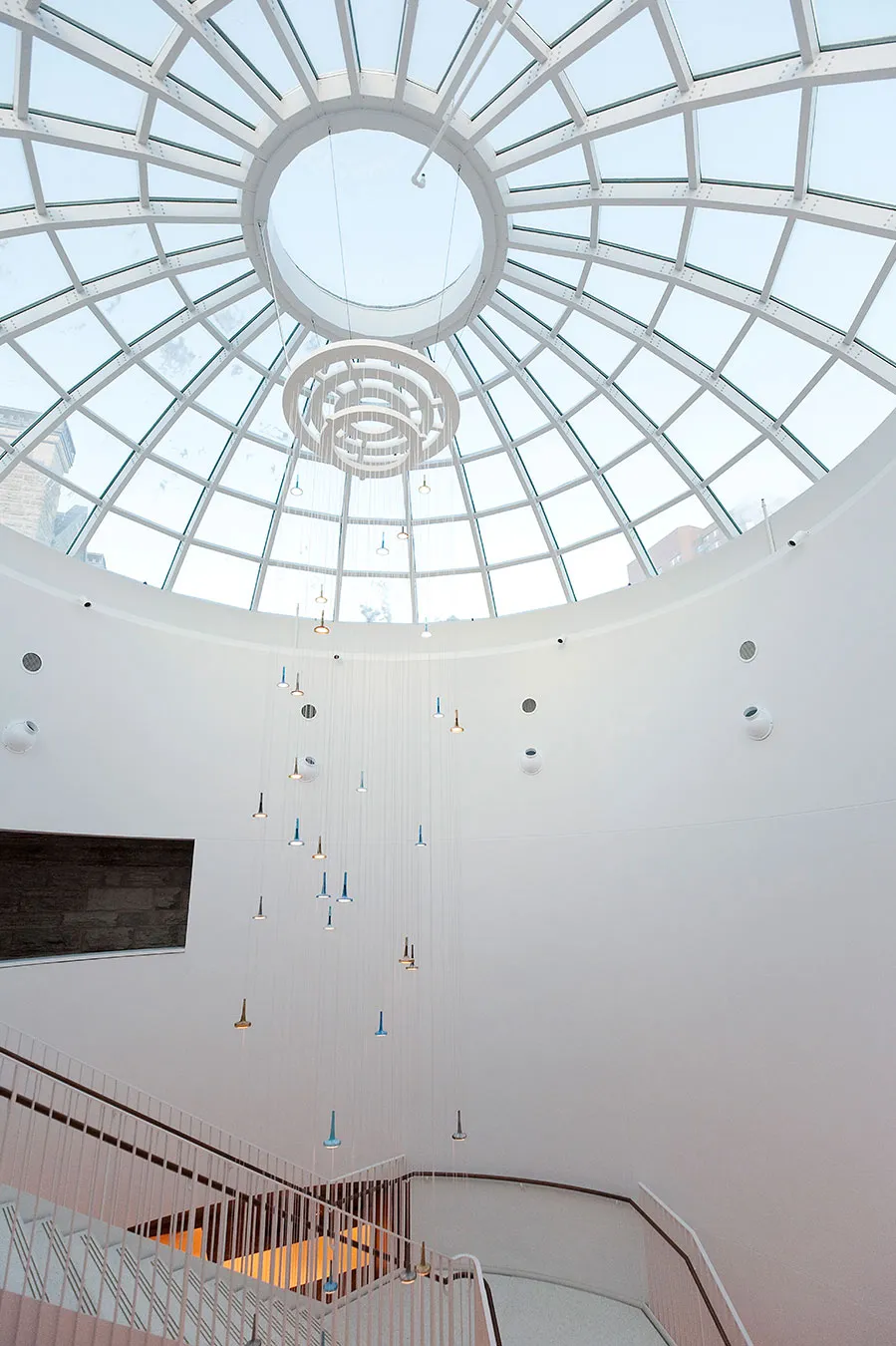
Acoustical plaster is a relatively specialized building material, and for architects and homeowners encountering it for the first time, the questions tend to follow a predictable pattern: how well does it actually work, how is it different from other acoustic treatments, and what does it take to specify and install it successfully. The following covers the questions that come up most often.
For additional technical questions, visit the full Frequently Asked Questions page.
Every project has a different acoustic brief. The appropriate system depends on target NRC values, wall or ceiling geometry, substrate conditions, finish requirements, and budget. Consultation with a specialist early in the design process allows acoustic and aesthetic decisions to be integrated rather than resolved in sequence. If you are working on a project and want to understand whether acoustical plaster is the right approach, the team at BASWA is available to advise.
